
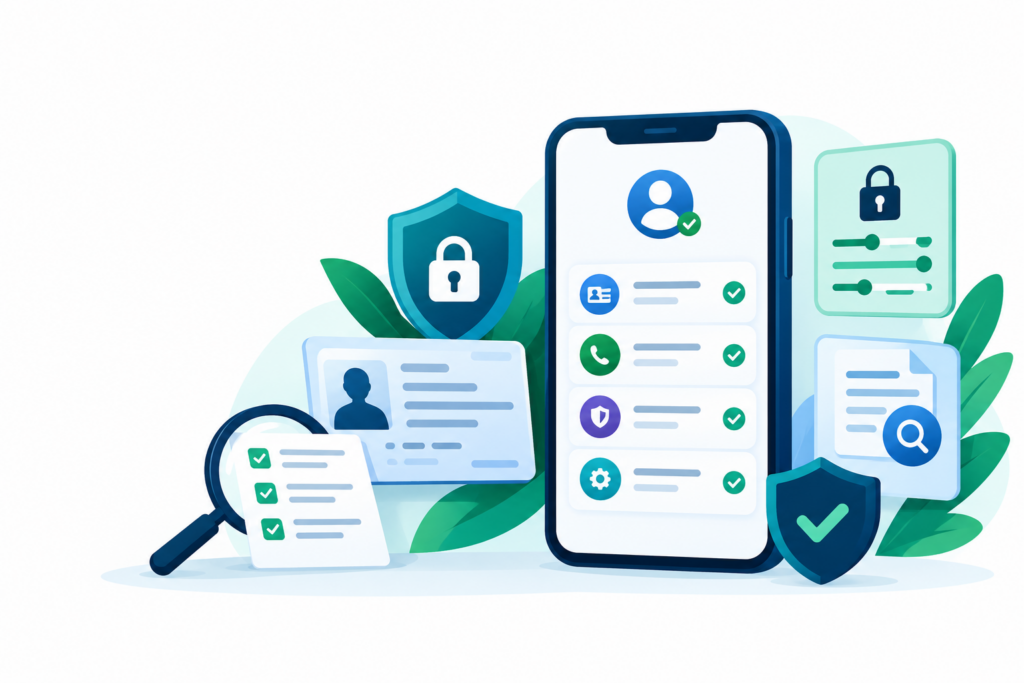
When considering an online gaming platform, one of the first questions people ask is: Is Playkaro safe to use? Before creating an account, sharing identity documents or making a payment, it is important to understand how the platform handles verification, personal information, account security and withdrawals.
A professional-looking website or a published privacy policy can be useful starting points, but neither proves that a service is independently verified, appropriately licensed or risk-free.
This guide explains how to assess Playkaros.com, what to look for during account verification, which privacy questions deserve attention, and what checks to complete before deciding whether to proceed.
Important: This article is an informational safety guide, not a guarantee of platform legitimacy or a recommendation to gamble. The website’s own statements should be distinguished from independently verified facts. Online gaming and real-money wagering may be restricted or prohibited depending on your location and the applicable law.
Read more: Playkaro: Common Mistakes New Players Make
Quick Answer: Is Playkaro Safe?
There is no responsible way to give an unconditional yes-or-no answer without establishing the exact website operator, checking current licensing information and independently verifying the relevant security and payment practices.
Playkaro publishes information about account verification, privacy, terms and responsible gaming. Its privacy policy describes the collection of identity, contact, financial, technical and gameplay information. Its terms state that identity checks may be requested before withdrawals or access to certain account features.
These disclosures help explain the site’s stated procedures, but they are not independent proof that its safeguards work as described.
Before using the service, check the following:
- Correct website: Confirm that you are visiting the exact domain, playkaros.com, rather than a similarly named website or app.
- Operator identity: Establish the legal entity responsible for the service and verify its contact details.
- Licensing: Check any claimed licence directly with the relevant licensing authority.
- Account verification: Understand which documents may be requested, why they are needed and how they are submitted.
- Privacy: Read the policy to understand collection, sharing, retention and deletion of your information.
- Payments: Review withdrawal rules, fees, bonus restrictions and dispute procedures before depositing money.
- Legal eligibility: Confirm that the service and the relevant activity are lawful in your location.
If important information cannot be independently confirmed, treat that uncertainty as a reason to pause rather than as proof that the platform is safe.
1. What Is Playkaro, and Which Website Are You Checking?
The name Play Karo can appear in connection with different websites, services or applications. This makes checking the exact domain especially important.
This guide concerns Playkaros.com. Its published website describes services involving online casino games, sports betting, live games and promotional offers. Its terms and conditions also describe account registration, identity verification, deposits, withdrawals and bonus requirements.
Do not assume that every product using a similar name has the same owner, privacy policy, licensing status or payment arrangements.
Before sharing information, verify:
- The complete domain displayed in your browser.
- The legal operator’s name and registered business details.
- The our support channels listed on the same website.
- The privacy policy and terms that apply to that specific service.
- Any licence number and the identity of the issuing authority.
A domain name, HTTPS connection or familiar brand name does not, by itself, establish that a business is trustworthy.
Read more: How to Stay Safe and Secure When Gaming Online with Playkaro
2. Account Verification and KYC: What Should You Expect?
Know Your Customer, commonly called KYC, is a process used to establish a customer’s identity. Depending on the service and applicable requirements, it may involve checking a person’s name, age, address or payment ownership.
Playkaro ID published terms state that the platform may request a government-issued photo ID, proof of address and proof of payment method before processing withdrawals or enabling certain account features.
The documents actually required may vary. Confirm the current requirements through the policy and support channels before submitting anything.
What documents might be requested?
Depending on the operator’s documented procedure, identity checks can involve:
- A government-issued identity document.
- Proof of date of birth or legal age.
- Proof of address, where required.
- Evidence that the payment method belongs to the account holder.
- Additional information needed to resolve a verification discrepancy.
These are examples of common verification categories, not a guarantee that every document listed is required by Playkaros.com.
How to assess a KYC request safely
Step 1: Access this website directly.
Type the verified domain into your browser instead of following an unsolicited message, shortened link or unfamiliar advertisement.
Step 2: Read the verification instructions.
Check which information is required, why it is needed, how it will be submitted and whether an approved verification provider is involved.
Step 3: Check the submission channel.
Use the documented account verification process. Be cautious if an individual asks you to send identity documents through an unrelated personal email, messaging account or file-sharing link.
Step 4: Check the privacy implications.
Before uploading a document, review the policy for information handling, third-party verification providers, retention periods and deletion requests.
Step 5: Keep a record.
Save the date of submission, any verification reference number and relevant support correspondence. Do not keep unnecessary copies of sensitive documents in insecure locations.
Why can verification fail?
Common reasons include inconsistent personal details, unreadable document images, expired documents, an unsupported document type or a mismatch between the account holder and the payment method.
If verification is rejected, ask the our support team for the specific reason and the approved way to correct it. Avoid repeatedly uploading documents without understanding the issue.
Never share your account password, one-time password (OTP), payment PIN or banking login details with someone claiming to be a verification agent.
3. Privacy Policy: What Personal Information Could Be Collected?
A privacy policy should explain what information a service collects, why it collects it, who may receive it, how long it is retained and what choices users have.
Playkaros.com’s published privacy policy identifies several categories of information:
| Data category | Examples described in the policy | What to check |
|---|---|---|
| Identity | Name, date of birth and ID details | Why each item is needed |
| Contact | Email, phone and WhatsApp details | Whether promotional messages are optional |
| Financial | Bank details, UPI IDs and transaction history | How payment information is protected |
| Technical | IP address, device and browser information | Which cookies and analytics tools are used |
| Gameplay | Activity, session duration and betting history | How activity is used and retained |
| Communications | Customer-support conversations | Who can access records and for how long |
The categories above reflect the published policy. They do not establish that every item is collected from every user or independently confirm how the data is secured.
Does the privacy policy explain data sharing?
The published policy says information may be shared with service providers involved in payments, identity verification, fraud prevention, support and analytics, as well as with authorities where legally required.
That is an important distinction: a statement that a business does not sell personal information does not necessarily mean information is never shared. Service providers may still receive data to perform specific functions.
Before proceeding, look for clear answers to these questions:
- Which legal entity determines how your personal information is processed?
- Which third parties can access identity and payment information?
- Are promotional communications optional, and how can consent be withdrawn?
- How long are identity documents and transaction records retained?
- How can you request access, correction or deletion?
- What happens to records that must be retained for legal reasons?
- How can you report a suspected data breach?
If the policy does not answer an important question, ask the operator for clarification before providing sensitive information.
Can you request deletion of your data?
Playkaros.com’s published policy describes rights to request access, correction and deletion, subject to applicable retention requirements.
A deletion request does not always mean every record can be erased immediately. Legal, regulatory or legitimate recordkeeping requirements may affect what can be deleted and when.
Use the contact method documented in the policy, keep a copy of your request and ask for an explanation if some information must be retained.
Read more: Playkaro – The Ultimate Guide to Online Cricket Betting and Gaming in India
4. Website Security: What Should You Check?
Website security and business trustworthiness are related but different questions.
HTTPS helps protect information in transit between a browser and a website. It does not prove that the business operating the website is legitimate, that its licence is valid or that a withdrawal will be processed.
Use the following checks to assess the technical signals available to you.
Check the connection
Look for HTTPS and inspect the browser’s connection information if you have concerns. A browser warning about an invalid certificate or an unsafe connection is a reason not to submit personal or payment information.
Do not interpret a secure connection as a complete safety certification.
Protect your account
- Use a unique, strong password that you do not reuse elsewhere.
- Enable multi-factor authentication if the service offers it.
- Keep your email account and mobile number secure.
- Never disclose an OTP or password to customer support or another user.
- Avoid logging in on shared devices and sign out when finished.
- Keep your browser, operating system and security software updated.
Watch for suspicious requests
Be wary of messages claiming that your account will be closed unless you immediately provide an OTP, pay an unexpected fee or send identity documents to a personal account.
If a request seems unusual, stop and independently navigate to this website to contact support.
5. Licensing and Legal Eligibility: An Essential Check
A platform’s licensing status is a separate question from whether its website uses encryption or publishes a privacy policy.
Playkaros.com’s About Us page claims that the service operates under a Curaçao eGaming licence. That is a statement made by the operator; it should not be treated as independently verified until the relevant licence and the named legal entity have been checked against authoritative records.
A useful verification process is to:
- Find the exact licence number and the legal entity named on the website.
- Identify the relevant licensing authority and its register.
- Search for the licence and confirm that the entity, domain, status and permitted activities match.
- Check whether the licence is current and whether it covers the service being offered.
- Save the register entry or written confirmation for your records.
A licence associated with a similarly named business is not enough. Nor should a logo, badge or certificate displayed on a website be treated as conclusive proof.
Read more: Playkaro Register: Everything You Need to Know Before You Sign Up
What about users in India?
The legal position can depend on the type of activity, applicable central and state law, and the rules in force at the time of access. A foreign licence does not automatically establish permission to offer every form of real-money gaming to users in India.
Check current legal sources or seek qualified legal advice if you are unsure whether the activity is permitted where you live. Do not deposit money merely because registration is technically possible.
6. Deposits, Withdrawals and Payment Safety
Payment procedures deserve attention before an account is funded, not only after a withdrawal problem arises.
Playkaros.com’s terms state that deposits and withdrawals should use payment methods registered in the account holder’s own name. They also say that verification, suspected fraud or bonus-related issues may affect withdrawal processing.
These are the operator’s published rules, not a guarantee of payment timing or a verified record of successful withdrawals.
Before making any payment, examine the following.
Withdrawal rules
- What is the minimum and maximum withdrawal amount?
- Which payment methods are supported for withdrawals?
- Are there transaction fees or processing limits?
- Can identity verification be required after a deposit?
- What circumstances permit a withdrawal to be delayed or refused?
- What is the formal complaint and escalation process?
Bonus conditions
A promotional balance may be subject to wagering requirements, expiry dates, game restrictions or maximum withdrawal conditions.
Read the complete terms before accepting a bonus. Do not assume that a displayed balance is immediately withdrawable cash.
Practical payment precautions
Use only a payment method that belongs to you and is permitted under the published rules. Keep transaction references and receipts. Check the payee details before authorising a transfer.
Never pay an unexpected “release fee,” “tax clearance fee” or extra deposit merely because an unverified individual promises to unlock your balance. Independently confirm any legitimate charge through the terms and documented support process.
If a payment or withdrawal fails, contact the provider, preserve relevant records and raise a dispute with your bank or payment provider when appropriate.
7. Warning Signs You Should Not Ignore
No single warning sign proves that a website is fraudulent, but several warning signs together justify stopping and investigating further.
Pause if you encounter any of the following:
- The domain differs from the one you intended to visit.
- The legal operator or its contact details cannot be established.
- A claimed licence cannot be matched to a record.
- The site requests an OTP, password or payment PIN from you.
- Support asks for documents through an unrelated or unverified channel.
- Withdrawal conditions are unclear or appear to change without explanation.
- You are pressured to deposit more money to access an existing balance.
- Bonus requirements are difficult to find or inconsistent across pages.
- A security warning appears in your browser.
- Support will not explain how to raise a formal complaint.
Do not respond to pressure by sending more personal information or money. Save relevant evidence, stop further transactions where possible and use independently verified support channels.
8. A Pre-Registration Safety Checklist
Before creating an account or providing identity documents, review each item below.
- I have confirmed the exact website domain.
- I have identified the legal entity operating the service.
- I have checked any licence against an authoritative source.
- I have confirmed that the activity is lawful where I live.
- I have read the privacy policy and understand the data-sharing terms.
- I understand which documents may be required for verification.
- I know how to contact our support and raise a complaint.
- I have read withdrawal rules, payment restrictions and bonus conditions.
- I have checked the website connection and secured my account credentials.
- I understand that money placed at risk can be lost.
If any important item remains unresolved, postpone registration or payment until you have a satisfactory answer.
9. What Should You Do If You Have Already Shared Information?
If you have already submitted personal information or made a payment and become concerned, take practical steps promptly.
If you shared account credentials: Change the affected password and any reused passwords. Secure your email account and enable multi-factor authentication where possible.
If you shared an OTP or payment credentials: Contact your bank or payment provider immediately if financial access may be compromised. Use channels, monitor transactions and follow their instructions.
If you submitted identity documents: Contact the platform through its documented privacy channel to ask how the information is being handled, what records are retained and how to exercise your available rights. Be alert to subsequent impersonation attempts.
If a payment is disputed: Preserve transaction references, receipts, messages and support tickets. Contact the relevant payment provider or bank and ask about available dispute or fraud-reporting procedures.
If you suspect a scam: Do not send additional money to recover a balance. In India, you can seek guidance through cybercrime reporting channels, including the National Cyber Crime Reporting Portal and the cybercrime helpline where applicable.
10. Frequently Asked Questions
Is Playkaro safe for beginners?
Beginners should apply the same checks as experienced users. Confirm the domain, operator, licensing claims, legal eligibility, privacy terms and withdrawal rules before sharing personal information or making a payment. No platform should be considered risk-free.
Does Playkaro require KYC verification?
Playkaros.com’s published terms state that identity documentation may be required before withdrawals or access to certain account features. Confirm the current requirements and approved submission process directly through the exact website you intend to use.
Is it safe to upload Aadhaar or other identity documents?
Only submit a document after verifying the recipient, the purpose of collection, the submission channel and the data-retention policy. Check whether an alternative document is accepted and whether any legally permitted masking or redaction is available. Never send documents to an unverified individual.
Does HTTPS mean Playkaros.com is legitimate?
No. HTTPS helps secure data in transit, but it does not independently verify the operator’s identity, licensing status, financial practices or withdrawal reliability.
Can Playkaro delay a withdrawal because of KYC?
The website’s published terms say that pending verification and certain compliance concerns can affect withdrawals. If a delay occurs, request the specific reason and the applicable rule in writing, keep records and use the documented dispute process.
Does a privacy policy guarantee that my data is safe?
No. A privacy policy explains the operator’s stated practices. It does not independently demonstrate that every safeguard is implemented effectively. Look for clear disclosures, verifiable security information and meaningful ways to exercise your privacy rights.
Should I deposit money before completing verification?
Do not assume that registration means you are fully verified or eligible to withdraw. Understand the verification requirements, withdrawal conditions and legal position before funding an account. If these remain unclear, do not deposit.
Final Verdict: Verify First, Decide Carefully
The answer to “Is Playkaro safe?” depends on more than the appearance of the website or its own security claims. The relevant questions are whether the operator can be identified, whether any licence is independently verifiable, whether its data practices are sufficiently transparent, whether its payment rules are clear and whether the activity is lawful for you.
Playkaros.com publishes terms and a privacy policy describing identity verification, information collection and withdrawal conditions. Those documents are useful starting points, but they should be evaluated alongside independent evidence rather than treated as proof of safety.
The practical rule is simple: verify the domain, check the operator and licence, understand the privacy and payment terms, and pause whenever a material question remains unanswered. Never share passwords or OTPs, and never risk money you cannot afford to lose.